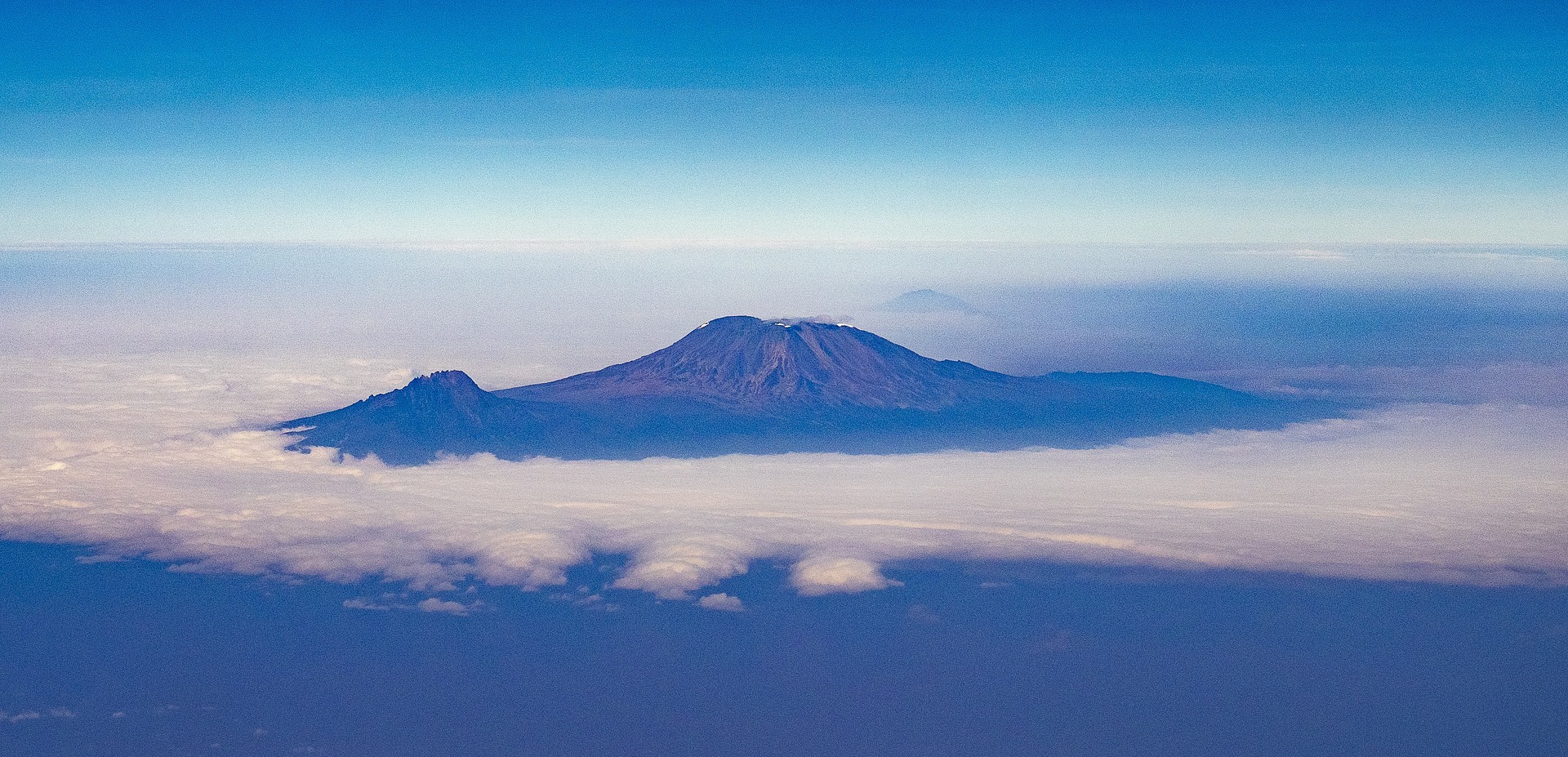
7 Days Kilimanjaro — Machame Route
Mount Kilimanjaro
Duration
7 days / 6 nights
Starts
Moshi
Ends
Moshi
Safari style
Mid-range
Group
Private — your own guides, cook and porters
Best time
January to mid-March and June to October
Safari overview
Kilimanjaro is a walk, not a climb, which is exactly why it is dangerous to underestimate. You need no ropes and no mountaineering skill. You need to handle altitude, and the biggest factor in whether you reach Uhuru Peak is how many days you spend acclimatising.
Machame is the scenic route and the busiest one. It works well because its profile climbs high and sleeps low — most notably at Lava Tower on day four, where you go to about 4,600 metres and then descend to sleep at Barranco. That is not a detour; it is the acclimatisation.
We run it over seven days rather than the six some operators sell. The cost difference is small. The difference in summit odds is not.
We do not quote success percentages. Operators inflate them and nobody audits the numbers. What we will tell you is that an extra day on the mountain buys more summit chance than any amount of training.
- Machame Camp — 11 km, 5–7 hours walking
- Shira Camp — 5 km, 4–6 hours walking
- Barranco Camp — 10 km, 6–8 hours walking
- Karanga Camp — 5 km, 4–5 hours walking
- Barafu Camp — 4 km, 3–4 hours walking
- Mweka Camp — 17 km, 10–14 hours
- Moshi — 10 km, 3–4 hours walking, then 1 hour by road
Safari highlights
Day by day
Every day below can be moved, lengthened or dropped. This is how we would run it.
Registration at the gate, then straight up through montane rainforest — dripping, mossy, full of birdsong and, if you are lucky, colobus. It rains here more often than not, whatever the season, so waterproofs go in the daypack rather than the duffel.
You emerge into heather and giant erica towards the end of the day and camp on the ridge at 3,000 m.
- Registration at Machame Gate
- Ascent through montane rainforest
- First health check at camp
- Drive
- 11 km
- Travel time
- 5–7 hours walking
- Overnight
- Machame Camp
- Meals
- Breakfast, Lunch, Dinner
Machame Camp, 3,000 m — our own tents, mess tent and cook.
Tonight
A short but steep day out of the forest and onto the Shira Plateau — one of the highest plateaus on earth and the floor of an older, collapsed cone. The vegetation drops away and Kibo appears properly for the first time.
Short distance, big altitude gain. Walk slowly. Your guide will say pole pole roughly two hundred times this week and he means it.
- Steep ascent onto the Shira Plateau
- First full view of Kibo
- Acclimatisation walk before dinner
- Drive
- 5 km
- Travel time
- 4–6 hours walking
- Overnight
- Shira Camp
- Meals
- Breakfast, Lunch, Dinner
Shira Camp, 3,840 m.
Tonight
The most important day of the week and the one people misunderstand. You climb east to Lava Tower at about 4,600 m, have lunch there, and then descend to sleep 600 m lower at Barranco.
That looks like wasted effort and is the opposite: climb high, sleep low is how acclimatisation works, and this single day does more for your summit chances than anything else on the route. Most people feel rough at Lava Tower and noticeably better by the time they reach camp.
Barranco itself is the finest campsite on the mountain — giant groundsels, the Breach Wall above you, and the lights of Moshi far below at night.
- Ascent to Lava Tower, 4,600 m
- Lunch at altitude
- Descent to Barranco — climb high, sleep low
- Health check on arrival
- Drive
- 10 km
- Travel time
- 6–8 hours walking
- Overnight
- Barranco Camp
- Meals
- Breakfast, Lunch, Dinner
Barranco Camp, 3,960 m.
Tonight
The Barranco Wall looks impossible from camp and is not — it is a scramble rather than a climb, using hands in a few places, and it takes about an hour and a half. It is the best morning on the mountain and the one everybody photographs.
Then a short day across the Karanga Valley to camp. Adding the Karanga night is part of why this is a seven-day route rather than six: it means summit night starts rested.
- The Barranco Wall scramble
- Kissing Rock
- Short afternoon and an early night
- Drive
- 5 km
- Travel time
- 4–5 hours walking
- Overnight
- Karanga Camp
- Meals
- Breakfast, Lunch, Dinner
Karanga Camp, 3,995 m.
Tonight
A deliberately short day up alpine desert to base camp. You arrive around lunchtime, eat early, and are in the tent by seven trying to sleep — which almost nobody manages.
Your guide will go through summit night in detail: layers, water, pace, what to eat, and what happens if you have to turn around. Listen to that briefing properly.
- Short ascent to Barafu
- Summit briefing and kit check
- Early dinner and rest before midnight
- Drive
- 4 km
- Travel time
- 3–4 hours walking
- Overnight
- Barafu Camp
- Meals
- Breakfast, Lunch, Dinner
Barafu Camp, 4,673 m — base camp.
Tonight
You are woken around 23:30 for tea and biscuits and start walking a little after midnight, in the cold and the dark, in a slow line of head torches.
Six or seven hours of switchbacks brings you to Stella Point on the crater rim at about 5,750 m, usually right as it gets light. Another forty-five minutes along the rim, past the glaciers, is Uhuru Peak — 5,895 metres, the highest point in Africa, and the sign everybody photographs.
Then you go down, a long way. Back to Barafu for a rest and something to eat, then on down to Mweka at 3,100 m. It is a very long day and you will sleep extremely well at the end of it.
- Midnight start for the summit
- Stella Point at first light
- Uhuru Peak, 5,895 m
- Descent to Barafu, then Mweka
- Drive
- 17 km
- Travel time
- 10–14 hours
- Overnight
- Mweka Camp
- Meals
- Breakfast, Lunch, Dinner
Mweka Camp, 3,100 m.
Tonight
A last descent through the rainforest to Mweka Gate — muddy, knee-punishing and cheerful. Certificates are issued at the gate: green for Stella Point, gold for Uhuru.
Then the drive back to Moshi, a shower that you will remember for some time, and the tipping ceremony with your crew.
- Descent through the rainforest
- Summit certificates at Mweka Gate
- Transfer to Moshi
- Tipping ceremony with the crew
- Drive
- 10 km
- Travel time
- 3–4 hours walking, then 1 hour by road
- Overnight
- Moshi
- Meals
- Breakfast, Lunch
Trek ends. Hotel night in Moshi included before and after the trek.
Tonight
Prices
| Season | Solo | 2–3 guests | 4–5 guests | 6+ guests |
|---|---|---|---|---|
| Low season 01 April – 31 May The long rains. Lowest prices, greenest landscape, some camps closed. | US$2,020 | US$1,625 | US$1,395 | US$1,279 |
| Shoulder season 01 March – 31 March Also 01 November – 19 December. | US$2,205 | US$1,770 | US$1,520 | US$1,395 |
| High season 01 June – 30 June Also 01 January – 28 February and the month of October. | US$2,405 | US$1,935 | US$1,660 | US$1,520 |
| Peak season 01 July – 30 September Also 20 December – 02 January. Book nine to twelve months ahead. | US$2,585 | US$2,080 | US$1,785 | US$1,635 |
All prices are per person sharing, in USD.
Supplements & child rates
| Single supplement For guests travelling alone or wanting a room to themselves. | US$435 per stay |
|---|---|
| Child sharing with two adults Children under 3 travel free of our costs; park fees may still apply. Ages 3–11 | US$920 per person |
| Room upgrade — luxury tier Upgrade the safari camps to the next comfort level throughout. | US$535 per person |
What is and is not included
Included
- Park entry, camping and rescue fees
- Professional mountain guides, assistant guides, cook and porters
- All meals on the mountain and drinking water
- Tents, sleeping mats, mess tent, table and chairs
- Two nights in Moshi, before and after, with breakfast
- Return transfers from Kilimanjaro Airport and to the gates
- Emergency oxygen and a pulse oximeter, with twice-daily health checks
- Government taxes
Not included
- International flights and Tanzanian visa
- Travel and medical insurance covering trekking to 6,000 m
- Personal trekking equipment and sleeping bag (rental available)
- Tips for the mountain crew
- Drinks and personal expenses in Moshi
- Anything not listed above
Worth adding
Coffee farm and waterfall tour
Half a day on the Chagga smallholdings below Kilimanjaro.
Questions we get asked
Route length matters more than route name. Machame over seven days is a good balance of scenery, acclimatisation and cost. Lemosho over eight and the Northern Circuit over nine acclimatise better and are quieter, and we would recommend either if the budget and the leave allow. Marangu over five has the lowest summit rates of the popular routes, whatever else you read about it.
Fit enough to walk six hours a day for a week and then do ten to fourteen hours on summit night. That is a real requirement but not an athletic one — we take plenty of people who trained by walking a lot with a loaded pack. Altitude tolerance matters more than fitness and is largely unrelated to it.
You leave Barafu around midnight, walk in the dark and the cold for six or seven hours to Stella Point, then another 45 minutes along the crater rim to Uhuru. It is the hardest thing most people who do it have ever done. Then you descend around 2,700 m the same day, which is its own kind of difficult.
Mild symptoms — headache, poor sleep, no appetite — are normal and expected. Our guides check oxygen saturation and pulse twice daily and carry emergency oxygen. If you develop serious symptoms you go down; that is not negotiable and it is the reason to choose a guide who will say so.
Yes, and we will show you the rates if you ask. Porter welfare on this mountain is a real and ongoing problem, and the cheapest quotes you find are cheap for a reason. Tips are on top of a proper wage, not instead of one.
Request this safari
Tell us your travel dates and group size. We will adjust the itinerary and send you an exact quote.