
Tarangire National Park
Tarangire National Park
National park
Baobabs, dry-season elephant herds in the hundreds, and a fraction of the Serengeti’s traffic.
Tarangire is the northern circuit’s most under-rated park, and the one our guides pick when they have a day off. Its spine is the Tarangire River, which holds water when the surrounding country has none, and from July onwards the concentration of animals along it is extraordinary.
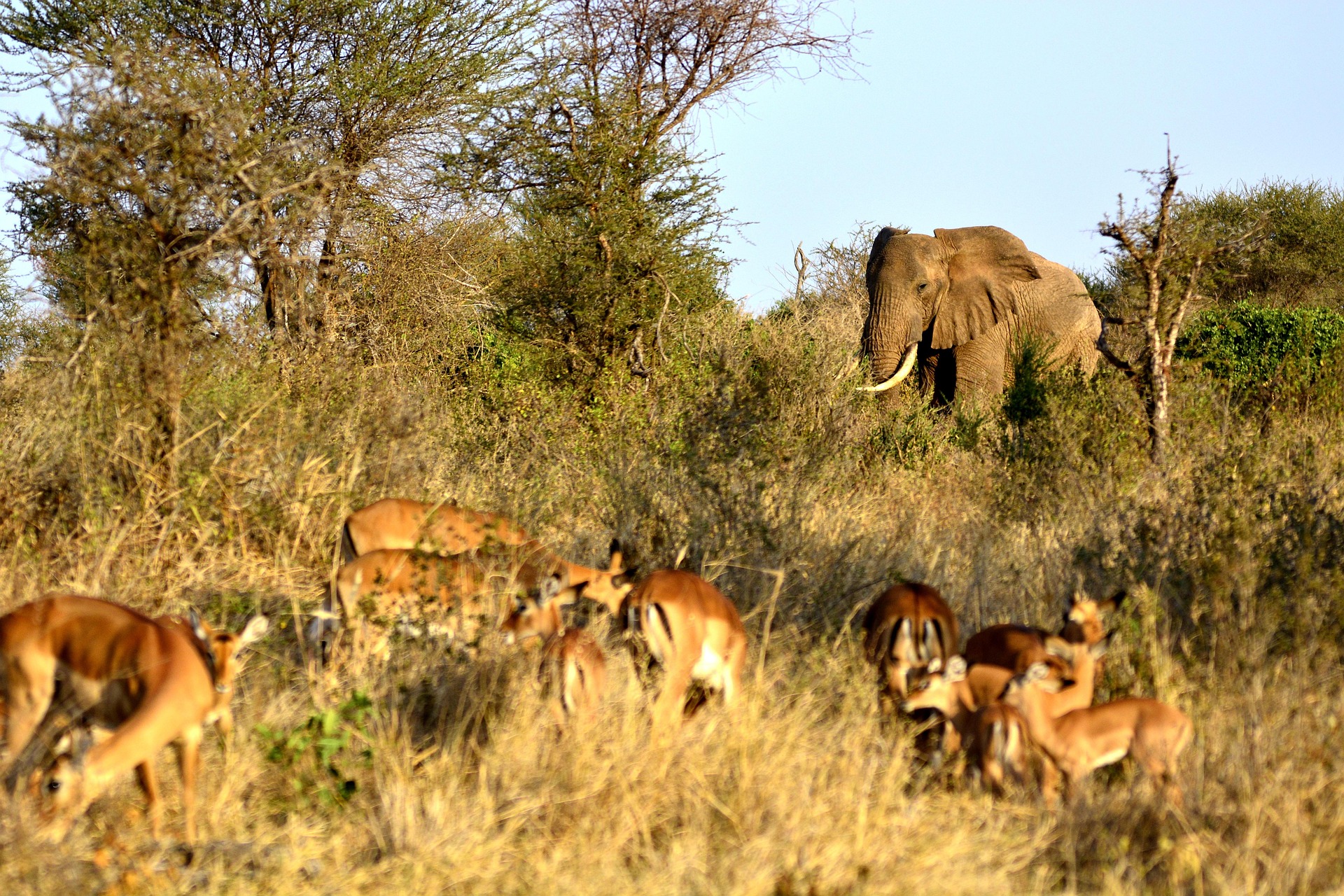
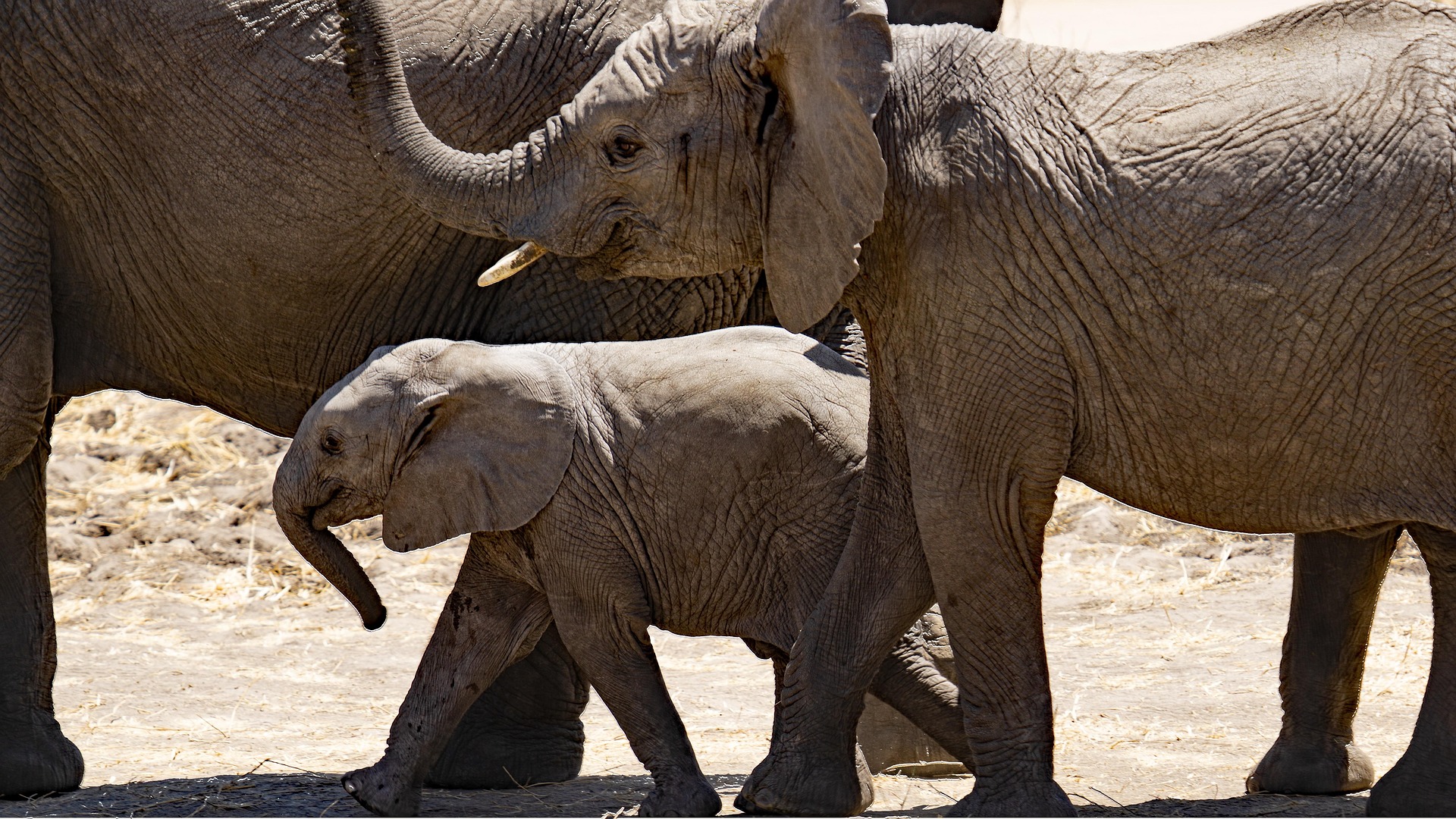
Elephant are the headline. In a good dry-season week you can watch herds of two and three hundred moving down to drink, families that have known each other for generations, calves running between the legs of aunts. The park also holds tree-climbing lion, large buffalo herds, fringe-eared oryx and gerenuk that you will not see further north.
Then there are the baobabs — thousands of them, some more than a millennium old, standing over the grass like something drawn rather than grown. In the late afternoon light they are the reason photographers keep coming back.
From our guides
Two nights inside the park beats one night at the gate. The southern reaches, past the swamps, get almost no day-trip traffic.
Why come here
- Some of the largest elephant concentrations in East Africa from July to October
- Ancient baobab country — visually unlike anywhere else on the circuit
- Far fewer vehicles than the Serengeti or the Crater
- Excellent birding, with over five hundred recorded species
The wildlife
Elephant in exceptional numbers during the dry season, along with lion, leopard, cheetah, buffalo, giraffe, zebra and wildebeest. Drier-country specials include fringe-eared oryx, gerenuk and lesser kudu. Python are sometimes seen in the sausage trees. The birding is outstanding — yellow-collared lovebird and ashy starling are near-endemic to this area.
When to visit
June to October is the park at its best, when animals from a much wider ecosystem are drawn to the river. November to May is greener and quieter, with better birding but far more dispersed game — a lot of the wildlife simply walks out of the park.
Tarangire National Park through the year
January
Weather
Warm with short storms
Wildlife
Green and dispersed; good birding
The migration
—
How busy
Quiet
Price season
High season
Our rating
February
Weather
Warm, showery
Wildlife
Dispersed. Migrant birds present
The migration
—
How busy
Quiet
Price season
High season
Our rating
March
Weather
Humid, storms building
Wildlife
Quiet; lush
The migration
—
How busy
Quiet
Price season
Shoulder
Our rating
April
Weather
Long rains
Wildlife
Dispersed; some tracks impassable
The migration
—
How busy
Quiet
Price season
Low season
Our rating
May
Weather
Wet, easing late
Wildlife
Beginning to concentrate
The migration
—
How busy
Quiet
Price season
Low season
Our rating
June
Weather
Dry and cool
Wildlife
Elephant herds building along the river
The migration
—
How busy
Moderate
Price season
High season
Our rating
July
Weather
Dry, cool mornings
Wildlife
Excellent — large elephant concentrations
The migration
—
How busy
Moderate
Price season
Peak season
Our rating
August
Weather
Dry and dusty
Wildlife
Outstanding elephant viewing
The migration
—
How busy
Busy
Price season
Peak season
Our rating
September
Weather
Dry, warming
Wildlife
Outstanding; predators follow the herds
The migration
—
How busy
Busy
Price season
Peak season
Our rating
October
Weather
Hot and very dry
Wildlife
Peak concentration along the river
The migration
—
How busy
Moderate
Price season
High season
Our rating
The single best month for elephants here.
November
Weather
Short rains arrive
Wildlife
Animals begin dispersing within days of the first rain
The migration
—
How busy
Quiet
Price season
Shoulder
Our rating
December
Weather
Warm, showery
Wildlife
Green, dispersed, quiet
The migration
—
How busy
Moderate
Price season
High season
Our rating
- Family-friendly
8 Days Tanzania Safari
Arusha › Tarangire › 2 nights Central Serengeti › Ngorongoro › Lake Eyasi › Arusha

- Family-friendly
6 Days Tanzania Safari
Arusha › Tarangire › 2 nights Central Serengeti › Ngorongoro

- Great Migration
9 Days Luxury Honeymoon Safari
3 nights Northern Serengeti › 2 nights Central Serengeti › Ngorongoro › 2 nights Tarangire

- Great Migration
14 Days Tanzania Photographic Safari
Arusha › 2 nights Tarangire › 2 nights Ngorongoro › 3 nights Central Serengeti › 5 nights Northern Serengeti

- Family-friendly
7 Days Tanzania Safari
Arusha › Tarangire › 2 nights Central Serengeti › Ngorongoro › Karatu

- Family-friendly
8 Days Tanzania Family Safari
2 nights Arusha › Tarangire › 2 nights Central Serengeti › Ngorongoro › Karatu
Where to stay
Camps and lodges we use here

Lemala Mpingo Ridge Lodge
Suites strung along a ridge above the Tarangire River, looking down on the elephant traffic below.

Oliver’s Camp
A small camp deep in the south of Tarangire, well beyond the day-visitor range, with walking permitted.
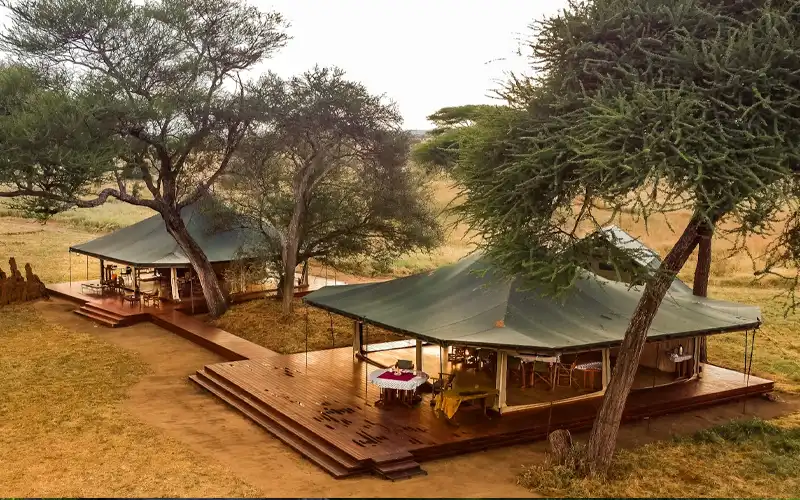
Honeyguide Tarangire Camp
A tented camp in northern Tarangire under a stand of large trees, with family tents available.

Maramboi Tented Lodge
Tents on the open plain between Tarangire and Lake Manyara, with zebra and wildebeest often grazing between them.
Things to do
Experiences here
Game drives
The core of every safari — a private 4×4, a roof that opens, and a guide…
Hot-air balloon safari
Launch before dawn, drift low over the plains as the light comes up, and land to…
Night game drive
A spotlight, a different cast of animals, and the parks where it is actually permitted.
Bush breakfast and sundowners
Breakfast laid out under an acacia, or a drink on a kopje while the light goes.
Tarangire National Park in pictures


Tarangire National Park, answered
Late in the dry season, roughly August to October. The river is the only reliable water for a long way and animals from a much wider ecosystem come to it. In the green season a great deal of the wildlife simply walks out of the park.
Fewer species overall and fewer vehicles. Better elephants — considerably better — and a more distinctive landscape because of the baobabs. Most people who go to both prefer the Serengeti; most guides prefer Tarangire.
Yes, from some of the lodges just outside the park boundary and in the adjoining concessions. Night drives are not permitted inside Tanzanian national parks, so anyone offering one "in Tarangire" means the edges.
One night gets you an afternoon and a morning drive, which is a real experience. Two nights lets you reach the south of the park, which almost nobody does and which is where the walking is permitted.
Further reading
From the journal


Build Tarangire National Park into a route that works.
One park is rarely a trip. Tell us how long you have and what else you want to see, and we will put Tarangire in the right place in the right week.