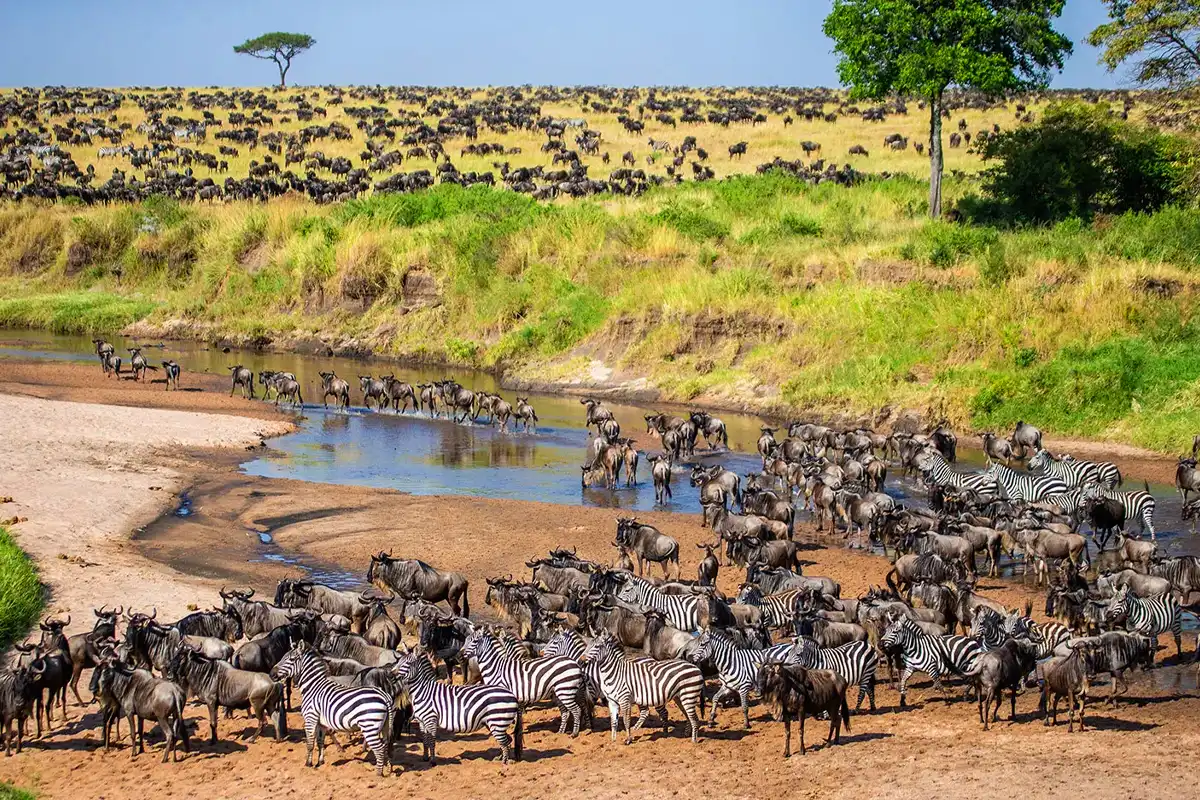
The short, unglamorous list that actually matters — including the luggage limit that catches people out.
Safari packing lists are usually far too long. Here is the version we would give a friend.
The luggage limit is real
If your itinerary includes light aircraft between camps — and most fly-in trips do — you are limited to roughly 15 kg per person in a soft-sided bag. Not a wheeled hard case. This is not the airline being difficult; the baggage hold on a Cessna Caravan is a specific shape.
Almost every safari camp does same-day laundry, often included. Pack for four days, not fourteen.
Clothing
- Neutral colours — khaki, olive, stone. Avoid bright white (dirty in an hour) and dark blue and black (tsetse flies are genuinely attracted to them).
- Long sleeves and long trousers for early mornings, evenings and mosquitoes.
- A proper fleece or light down layer. Dawn game drives in the open-roofed vehicle are cold, and the Ngorongoro rim at 2,200 metres is colder than people expect.
- A wide-brimmed hat and sunglasses. The equatorial sun is not subtle.
- Comfortable closed shoes. You will not be hiking unless you have booked a walking safari.
- A swimming costume — most lodges have a pool and the middle of the day is for using it.
The things people forget
- Binoculars. The single highest-value item you can bring. 8×42 is the sensible choice. One pair per person, not one per couple — sharing does not work.
- A head torch. Camps run on generators or solar and paths are unlit at night.
- High-factor sunscreen and lip balm with SPF.
- Insect repellent containing DEET or picaridin.
- Any prescription medication in its original packaging, plus a copy of the prescription.
- A universal adapter — Tanzania uses the UK-style three-pin plug.
- Cash in US dollars for tips. Notes should be dated 2009 or later; older notes are frequently refused.
Cameras
Bring more memory cards than you think and a blower or brush — the dust in the dry season is relentless and changing lenses in an open vehicle is how sensors get dirty. A 100–400mm zoom does most of the work. A big prime is a luxury, not a necessity.
What to leave at home
Camouflage-pattern clothing is illegal for civilians in Tanzania and will cause you real problems at the airport. Drones require permits that are difficult and expensive to obtain and are banned in the national parks. And you do not need safari-branded clothing from an outdoor shop; ordinary neutral clothes are fine.