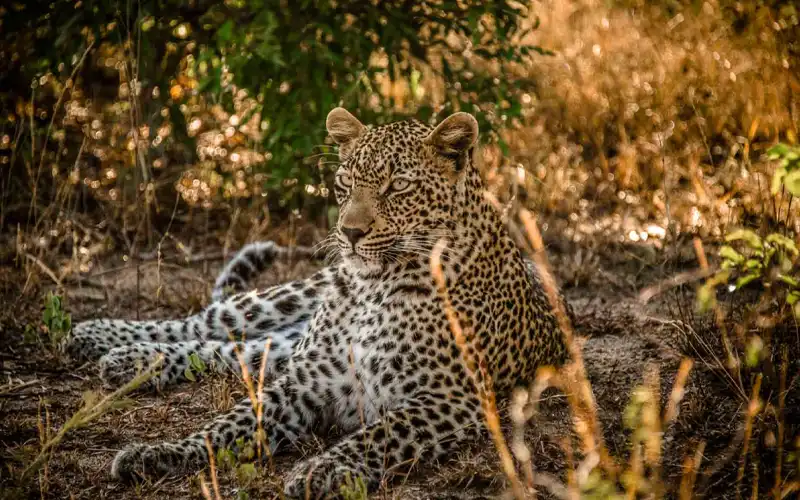
Fewer animals per hour, a fraction of the vehicles, and boat safaris. Why Ruaha and Nyerere reward a return visit.
Somebody who has done the Serengeti and the Crater usually asks the same question: what now? The answer is almost always south.
They are not better. They are different.
Let us be straight about density. You will see fewer animals per hour in Ruaha or Nyerere than in the Ngorongoro Crater. That is simply true and anyone who tells you otherwise is selling.
What you get instead is space, and a quality of experience that density does not buy.
Nyerere: the water changes everything
Carved out of the northern Selous in 2019 and now among the largest parks in Africa. The Rufiji runs through it in channels and lakes, which means you spend as much time on a boat as in a vehicle.
Drifting at eye level past a pod of two hundred hippo is nothing like looking down at one from a Land Cruiser. Elephant cross the channels in front of the boat. The water birding is superb.
It also holds one of the continent’s most significant African wild dog populations, and walking safaris are permitted — which they are not in the Serengeti.
Ruaha: the lions
The largest park in Tanzania and one of the least visited relative to its size. The Great Ruaha River is its spine, and in the dry season it shrinks to a chain of pools that everything in the ecosystem comes to.
Prides here are unusually large — twenty-plus animals is not remarkable — and buffalo hunting behaviour is regularly seen. The species list is odd in a rewarding way: this is a transition zone, so you get greater and lesser kudu alongside sable and roan.
The practical bit
Fly. The roads are long and rough and would eat a day in each direction. The two parks pair naturally and the flight between them is short — a week does both properly.
Season matters more than in the north. Both effectively close from March to May when the rains make the tracks impassable and most camps shut. June to October, and October specifically is the peak of the dry-season spectacle if you can stand the heat.
Who it suits
Second-time safari-goers, people who dislike sharing a sighting, anyone who wants to walk or get on a boat, and photographers who would rather have one good subject alone than five with eleven vehicles.
Not, generally, a first safari. The north earns its reputation and it is the right place to start.

